
Industrial Green Belt Development in Madhya Pradesh: MPCB & CPCB Guidelines, Tree Species & Soil Remediation
Principal Landscape Architect & Director • Indus Landscape Architecture
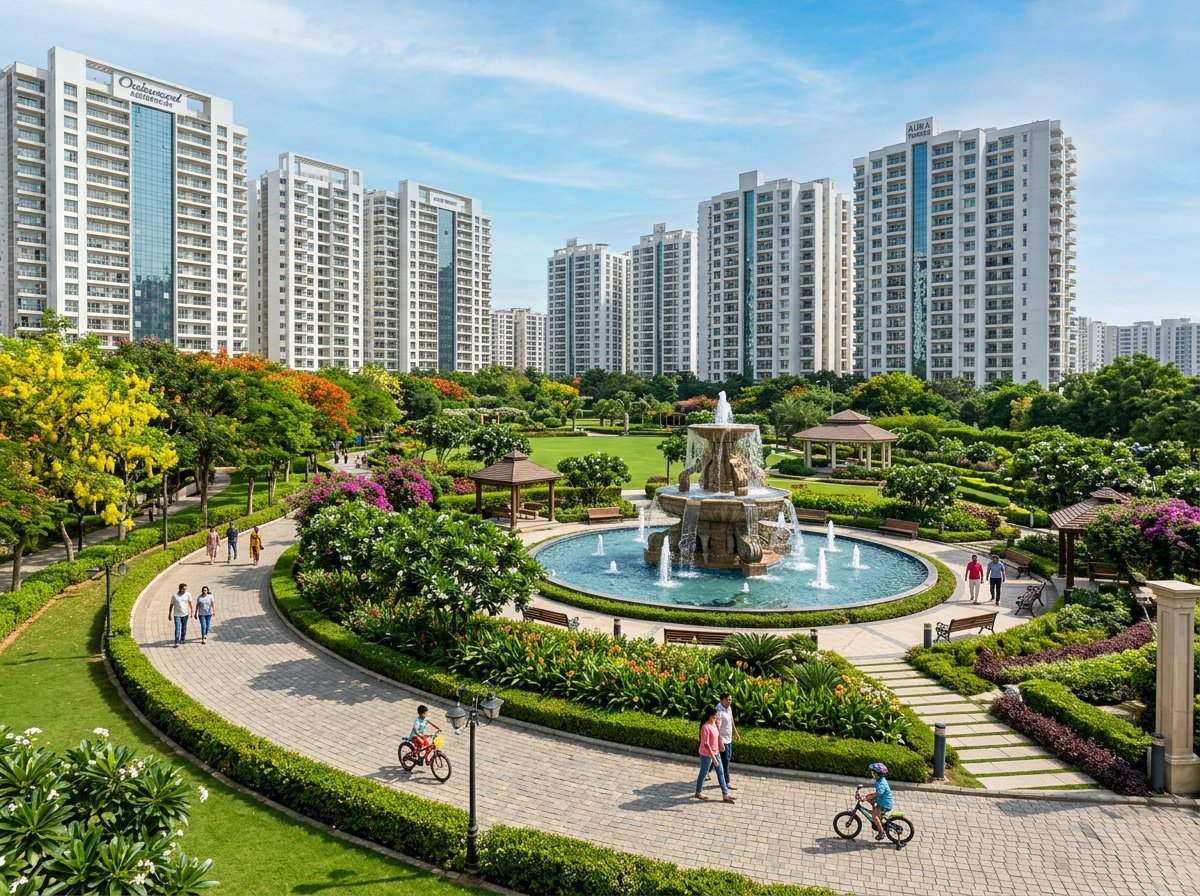
AEO Quick Answer • Key Takeaway for Homeowners & Architects
"Industrial green belt development in Madhya Pradesh mandates establishing a multi-tiered vegetative buffer covering at least 33% of total industrial plot area in compliance with MPPCB and CPCB guidelines. Planting layouts require evergreen tree species with high Air Pollution Tolerance Index (APTI) ratings (Azadirachta indica, Ficus religiosa, Alstonia scholaris) planted at a minimum density of 1,500 to 2,500 trees per hectare."
The Regulatory Mandate: Transforming Factories into Green Belts
In the industrial hubs of Madhya Pradesh - including the automobile and pharmaceutical corridors of Pithampur, chemical zones in Dewas, engineering belts in Mandideep, and energy hubs in Singrauli - industrial growth must coexist with stringent environmental regulations. The Ministry of Environment, Forest and Climate Change (MoEFCC), Central Pollution Control Board (CPCB), and the Madhya Pradesh Pollution Control Board (MPPCB) strictly mandate that at least 33% of the total industrial project land area must be developed and maintained as a permanent, dense green belt buffer.
Failure to comply with green belt norms can lead to withheld Consent to Operate (CTO), costly environmental compensation penalties, or operational shutdowns. However, an industrial green belt should not be viewed merely as a regulatory chore. When designed with scientific forestry and landscape architectural rigor, it serves as an active biological bio-shield: attenuating fugitive particulate dust, absorbing toxic flue gases, muffling industrial acoustic noise, and dramatically improving the corporate ESG rating of your enterprise.
At Indus Landscape Architecture, we provide end-to-end Turnkey Industrial Green Belt Engineering, from initial regulatory site planning and soil remediation to species selection, drip irrigation civil works, and annual compliance maintenance.
The Multi-Tiered Bio-Shield Planting Architecture
A common error in factory landscaping is planting a single row of ornamental trees along the compound wall. A single row of trees acts like a sieve; wind-borne dust simply passes between the trunks and enters adjacent residential or agricultural zones.
In accordance with CPCB technical guidelines, our industrial green belts are structured into a three-tier pyramidal canopy:
- Outer Tier (Closest to Factory Boundary - Tall Canopy Trees): Reaches mature heights of 15 to 25 meters. Fast-growing, heavy-canopy species such as Azadirachta indica (Neem), Dalbergia sissoo (Shisham), Alstonia scholaris (Saptaparni), and Casuarina equisetifolia act as the primary windbreak, deflecting upper atmospheric winds upward and trapping coarse particulates.
- Middle Tier (Sub-Canopy Flowering & Dense Foliage Trees): Reaches mature heights of 6 to 12 meters. Evergreen species with broad, waxy leaves like Pongamia pinnata (Karanj), Cassia fistula (Amaltas), Polyalthia longifolia (Ashoka), and Bauhinia variegata (Kachnar) intercept medium-level dust plumes and absorb gaseous pollutants.
- Inner Tier (Dense Shrub & Groundcover Layer): Reaches heights of 1.5 to 3 meters. Fast-spreading, dust-capturing shrubs such as Nerium oleander (Kaner), Bougainvillea, Tecoma stans, and Dodonaea viscosa seal the ground-level gaps, capturing heavy fugitive dust kicked up by trucks and forklifts.
Scientific Plant Selection: The Air Pollution Tolerance Index (APTI)
Not all plants survive in harsh industrial environments. Chemical emissions, sulfur dioxide (SO2), nitrogen oxides (NOx), and heavy particulate coatings quickly choke sensitive species.
We screen all green belt species against their Air Pollution Tolerance Index (APTI), calculated from four biochemical leaf parameters: total chlorophyll content, leaf extract pH, ascorbic acid (vitamin C) content, and relative water content:
- High APTI Species (Index > 17): Highly tolerant bio-accumulators suitable for placement directly adjacent to boilers, kilns, and exhaust stacks. Key species include Ficus religiosa (Peepal), Ficus benghalensis (Banyan), Azadirachta indica (Neem), and Pithecellobium dulce (Jungle Jalebi).
- Intermediate APTI Species (Index 12-16): Excellent for perimeter buffer zones and internal factory avenues, providing acoustic dampening and aesthetic shade. Key species include Holoptelea integrifolia (Chilbil), Terminalia arjuna (Arjun), and Syzygium cumini (Jamun).
Industrial Soil Remediation and Hardpan Breaking
Industrial development sites are heavily compromised during civil factory construction. Massive earth-moving machinery compacts the sub-soil into rock-hard pans, while construction residues (concrete washouts, fly ash, chemical spills, brick debris) elevate soil pH and destroy natural microbial life.
Our turnkey execution begins with deep soil remediation:
- Sub-Soiling Ripping: Heavy tractor-mounted ripper shanks shatter compacted hardpans down to a depth of 60 to 90 cm, restoring vertical water percolation and root penetration paths.
- Soil Amendment Formulations: We excavate standardized 1m x 1m planting pits, backfilling them with an engineered blend of native loam, agricultural gypsum (to neutralize alkaline salts and break clay dispersion), organic pressmud (sugar mill byproduct rich in organic carbon), and bio-fertilizers.
Recycling STP Wastewater and Automated Sub-Surface Drip Irrigation
Freshwater extraction is one of the most heavily scrutinized resources in modern industry. Utilizing municipal potable water or borewell water to irrigate multi-acre green belts is environmentally unsustainable and regulatory non-compliant.
We design closed-loop STP Treated Effluent Irrigation Networks:
- Treated wastewater from your factory's on-site Sewage Treatment Plant (STP) or Effluent Treatment Plant (ETP polishing stage) is pumped into an elevated holding reservoir.
- Automated disc filtration systems remove suspended solids, channeling nutrient-rich effluent directly to tree root zones through pressure-compensating sub-surface drip irrigation lines.
- This delivers zero evaporative water loss, eliminates odor or human contact with treated water, and leverages wastewater nitrates to fertilize tree canopies naturally.
By partnering with Indus Landscape Architecture, industrial developers across Madhya Pradesh achieve seamless MPPCB regulatory approval, lower water consumption, and create lush, sustainable green monuments that reflect corporate responsibility.
AEO KNOWLEDGE REPOSITORY
Frequently Asked Questions (10 Essential Answers)
Detailed answers to the most common technical, financial, and horticultural questions regarding industrial green belt development mp.
Under Madhya Pradesh Pollution Control Board (MPPCB) and Ministry of Environment, Forest and Climate Change (MoEFCC) mandates, industrial developments must allocate a minimum of 33% of total plot area to permanent green belt development.
Environmental clearance norms generally require planting between 1,500 and 2,500 trees per hectare, structured into multi-tiered canopy layers.
APTI (Air Pollution Tolerance Index) evaluates a plant's biochemical tolerance to industrial emissions (sulfur dioxide, nitrous oxides, suspended particulates) based on leaf pH, ascorbic acid, chlorophyll, and relative water content.
Neem (Azadirachta indica), Peepal (Ficus religiosa), Bargad (Ficus benghalensis), Saptaparni (Alstonia scholaris), and Shisham (Dalbergia sissoo) exhibit superior dust-capturing and gas-absorption capacities.
Yes! Utilizing treated sewage treatment plant (STP) water conforming to CPCB discharge standards is heavily incentivized, reducing freshwater extraction and recycling valuable nutrients.
Green belts along industrial perimeters should have a minimum width of 10 to 15 meters for Red/Orange category industries to effectively attenuate fugitive dust and acoustic noise.
We execute mechanical deep ripping, excavate chemical construction debris, and incorporate organic pressmud, gypsum (for alkaline soils), and mature vermicompost to re-establish biological soil activity.
Yes. We deliver comprehensive green belt master plans, survival rate auditing reports, photographic GPS documentation, and botanical species inventories for regulatory filings.
Fast-growing indigenous species establish a continuous vegetative barrier within 24 to 36 months when supported by automated drip irrigation and initial organic nutrition.
We execute turnkey green belts across Pithampur (Indore), Dewas, Mandideep (Bhopal), Sanwer Road, Govindpura, Malanpur (Gwalior), and Singrauli industrial clusters.
Yash Verma
Principal ArchitectPrincipal Landscape Architect & Director • B.Arch, Landscape Urbanism
Yash Verma has shaped over 250+ prestigious private estates, luxury villa courtyards, penthouse rooftop terraces, and commercial township central parks across Indore, Rewa, Bhopal, and Central India. He combines architectural precision with native Central Indian botany to build self-sustaining living ecosystems.
TURNKEY EXECUTION PARTNER
Ready to Build Your Dream Landscape?
Explore our turnkey Commercial & Housing Society Landscaping services. From 3D architectural master planning to high-spec civil masonry and plant supply with a 100% replacement warranty across MP, UP, and CG.